

Keynotes
Advanced Welding Technologies for Connection of EV Power Batteries
Dr. Pai-Chen Lin is a Professor of Mechanical Engineering at National Chung Cheng University, Taiwan. He received his PhD in Mechanical Engineering from the University of Michigan, Ann Arbor in 2006. He serves as the Director of the Education and Training Division of AIM-HI, the Director of the Advanced Machine Tool Research Center, and the Director of the Leading Edge Processing Rolling and Forging Technology Research Center. His research focuses on 3D printing technologies for metals for the development of customized components for the medical, semiconductor and aerospace industries. His main research areas are selective laser melting (SLM), direct energy deposition (DED), advanced welding processes, fatigue analysis and design, and failure analysis.
He has received three awards from the SAE International, U.S.A., including the Forest R. McFarland Award (2025), SAE Llord L. Withrow Distinguished Speaker Award (2018), and SAE Arch T. Colwell Merit Award for Excellent Technical Paper (2011). He also received the ASME Sam Y. Zamrik Literature Award for Outstanding Paper (2008) award from the ASME, U.S.A. He is currently serving as the Session Organizer of the WCX SAE World Congress Experience, and as the Associate Editor of the SAE International Journal of Materials and Manufacturing (SCI), the International Journal of Precision Engineering and Manufacturing (SCI), and the Journal of the Chinese Institute of Engineers (SCI).
Abstract
In the recent years, electric vehicles (EV) have seen a sharp increase in the automotive industry due to their significant benefit of zero emission and driving experience. However, in order to generate enough electric power, an EV often includes thousands of cells installed in the power battery. The connection of an EV power battery involves a hierarchical setup: thousands of individual cells are connected to form modules, which then link together to create the main traction pack. These connections must be extremely robust in order to endure constant vibrations, extreme temperatures and the transfer of high-voltage power. Advanced welding technologies, such as laser welding and ultrasonic welding, which offer high strength and production efficiency, are therefore adopted to join the tabs, electrodes, wires and busbars composed of copper and aluminum in the EV power battery. Experimental and computational methods were used to study the laser welding and ultrasonic welding processes for copper-to-copper, aluminum-to-aluminum, and aluminum-to-copper sheets. The mechanical performance of the welds was evaluated based on their tensile strength, hardness distribution, failure mode and fatigue life. The failure process and failure mode of welds in quasi-static tensile tests were investigated using finite element models of welds with a non-homogeneous material design and a ductile damage criterion. Life estimations of welds in fatigue tests were obtained using the global and local stress intensity factor solutions of welds and the Paris law. The computational results showed good agreement with the experimental ones.
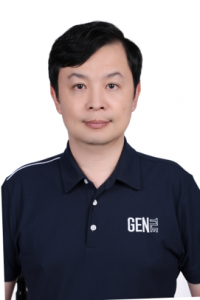
Dr. Pai-Chen Lin
Professor of Mechanical Engineering at National Chung Cheng University, Taiwan.
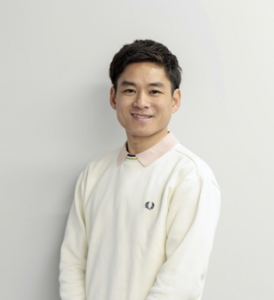
Dr. Dinh Tuan Tran
Associate Professor at the Faculty of Data Science, Shiga University, Japan, and a Visiting Associate Professor at Ritsumeikan University.
About
Dr. Dinh Tuan Tran is an Associate Professor at the Faculty of Data Science, Shiga University, Japan, and a Visiting Associate Professor at Ritsumeikan University. His research interests span artificial intelligence, data science, robotics, computer vision, and human-robot interaction. He has authored numerous publications in leading international journals and conferences and has received several prestigious awards, including the IEEE IROS Best Entertainment and Amusement Paper Award and the ICEIC Best Paper Award. Dr. Tran actively serves the research community as an associate editor, reviewer, and committee member for major IEEE conferences and journals.
TBA
TBA
Transforming Paddy Waste into Energy Solutions: Nanocellulose for Next-Generation Supercapacitors
Phuong Dinh Ngo, Ph.D., is Head of the Technology and AI Department at the Norwegian
Centre for E-health Research, University Hospital of North Norway. Since 2024 he has led the
department’s research portfolio and staff and contributed to the centre’s strategy on AI in the
Norwegian health service. The department works on clinical language technology and
automated clinical coding, generative AI for healthy and sustainable food, AI for clinical decision
support, and AI security. He also leads a work package in a Research Council of Norway project
on generative AI for food and health and is an adjunct lecturer at the Faculty of Industrial
Management, Ho Chi Minh City University of Technology.
He received his Ph.D. in Mechanical Engineering from Purdue University, USA, in 2016, and his
B.Sc. in Mechanical Engineering from Universiti Teknologi PETRONAS, Malaysia. He was a
postdoctoral researcher at UiT The Arctic University of Norway (2016–2019) and a senior
researcher at the Norwegian Centre for E-health Research (2019–2024). He also has many
publications on safe and robust AI for healthcare and is a main contributor in the development of
Norway’s first clinical language models for ICD-10 coding of clinical text.
Abstract
Seafood producers around the world, especially for European markets, are under increasing pressure to demonstrate the sustainability of their products, as illustrated by the case of farmed Atlantic salmon from Norway. These producers are required to comply with European Union regulations concerning seafood labeling and the validation of environmental claims. They must also adhere to standardized sustainability reporting frameworks and meet aquaculture regulations, which link industry expansion to environmental performance metrics. Furthermore, commercial buyers demand evidence of environmental performance throughout the entire product life cycle, including feed production, marine aquaculture, processing, packaging, distribution, and end-of-life disposal. Meeting these requirements involves navigating regulatory standards in conjunction with technical guidelines on life cycle assessment methodologies, impact categories, and baseline emission factors, as established by entities such as the EU, FAO, IPCC, GHG Protocol, and national regulatory bodies. These reference sources often have overlapping scopes, are frequently updated, and exhibit methodological discrepancies, such as varying approaches to allocation between primary fillets and co-products. Although large language models (LLMs) provide rapid text summarization capabilities, they are subject to generating
inaccurate outputs (hallucinations) and often fail to specify source attribution or document versioning. This study introduces a prototype designed to mitigate these limitations using retrieval-augmented generation (RAG). Rather than generating responses entirely from memory, the system retrieves relevant evidence prior to response generation. The retrieval corpus includes structured claims instead of unstructured text passages. Each regulatory requirement, methodological rule, and default factor is structured as a distinct claim, accompanied by annotations containing its source, issuing authority, legal status, and version date. Statutory requirements are systematically mapped to corresponding implementation guidelines, enabling traceability from high-level regulatory mandates to specific life cycle assessment protocols. The retrieval mechanism combines lexical and semantic search strategies, and generated responses contain explicit citations to supporting claims. In cases where retrieval yields insufficient evidence, the system explicitly indicates the absence of supporting data. While demonstrated for Norwegian farmed salmon, the architecture is adaptable to other seafood supply chains, including pangasius and shrimp.
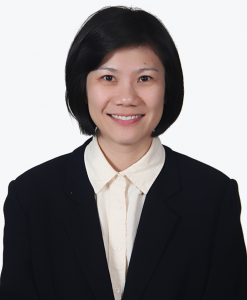
Assoc. Prof. Hui Lin Ong
Faculty of Chemical Engineering & Technology, Universiti Malaysia Perlis, Malaysia Department of Chemical Engineering, College of Engineering, Architecture and Fine Arts, Batangas State University, Philippines.
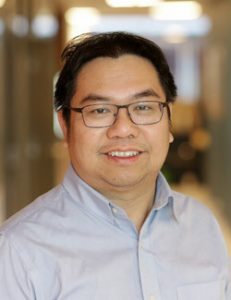
Dr. Phuong Dinh Ngo
Department Director Technology and AI, Norwegian Centre for E-health Research
From regulations and guidelines to life cycle assessment: retrieval-augmented generation with structured claims for sustainable seafood production
Hui Lin Ong is currently an Associate Professor at the Faculty of Chemical Engineering & Technology, Universiti Malaysia Perlis, Malaysia, and a Guest Professor at the Department of Chemical Engineering, College of Engineering, Architecture and Fine Arts, Batangas State University, Philippines. She was a Deputy Dean of Centre for Graduate Studies, Universiti Malaysia Perlis from year 2011 to 2013. She is a founding member of the Innovation Center for Clean Water and Sustainable Energy (WISE) in Malaysia since 2017. She obtained her Ph.D. in Advanced Materials, from Universiti Sains Malaysia, Malaysia in 2010. Her research interests are on nanomaterials from agricultural wastes and polymer-based nanocomposites for packaging, membrane, and energy storage applications. Dr. Ong has successfully complicated ten research projects funded by Malaysian government, L’Oreal and UNESCO, Malaysia, Toray, Japan and Ministry of Education, Taiwan. Dr. Ong served as a Visiting Professor in De La Salle University, Philippines during year 2014 – 2024, and Tribhuvan University, Nepal in 2019. She was also a Visiting Scholar at National Chiao Tung University (2017), National Tsing Hua University (2018), National Kaohsiung University Science and Technology (2019), and Yuan Ze University (2024), Taiwan. She has been invited as a speaker to share her research outputs in industries, conferences and universities in Malaysia, Thailand, Indonesia, Philippines, Taiwan, Japan, Australia, and the United States. She published more than 80 papers in international journals and conferences. Dr. Ong was awarded the For-Women-In-Science fellowship (FWIS) by L’Oreal and UNESCO Malaysia in 2011. In 2019, she received an Endeavour Australia Cheung Kong Research Leadership Award provided by the Department of Education and Training, Australia. With her current achievements, Dr. Ong has been featured as a leading woman (Women in Energy & Environment) on SoutheastAsianWomen.org.
Abstract
Agricultural waste is often perceived as a burden, yet it holds remarkable potential to shape a more sustainable future. By reimagining paddy straw as a valuable resource, we can create innovative pathways that connect renewable energy with sustainable manufacturing. This keynote will highlight how science and creativity converge to transform waste into nanocellulose, a material that embodies strength, lightness, and environmental responsibility.
Nanocellulose is more than a scientific achievement. It represents a vision of how renewable materials can power next-generation energy storage systems while advancing the principles of the circular economy. The journey from discarded residue to high-performance supercapacitors illustrates how sustainability and technology can work together to reduce waste, generate value, and inspire a more resilient world.
